Getting to Sepang Circuit: Every Route from KL and KLIA, and How to Leave
How to reach Sepang International Circuit for the 2026 F1 weekend: the KLIA Transit train to Salak Tinggi, Grab from Kuala Lumpur, driving and parking, and the part nobody plans for — getting out afterwards.
Last updated:
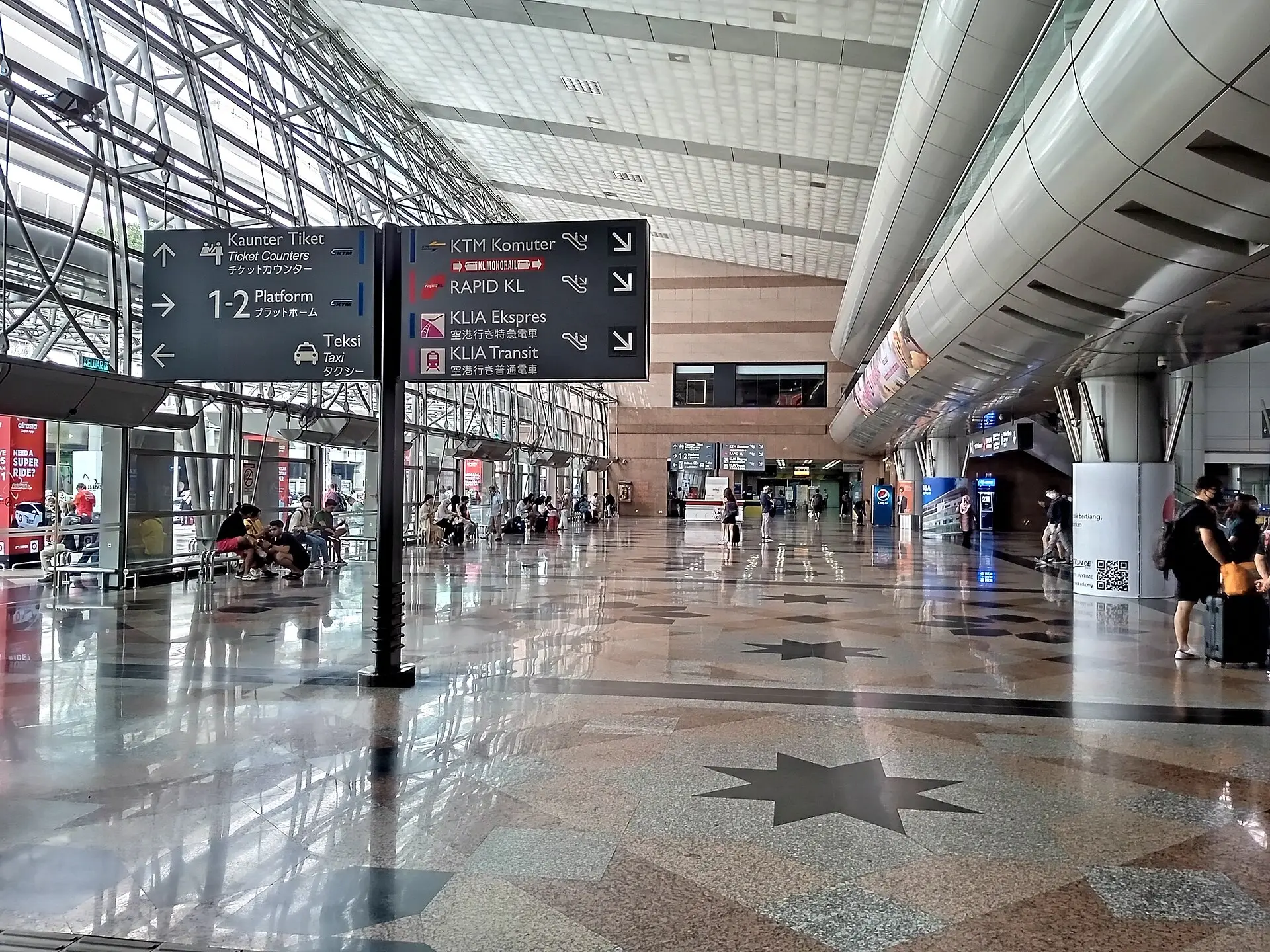
Sepang International Circuit sits about 60 km south of central Kuala Lumpur and roughly 10 minutes from KLIA. That geography explains most of what follows: the circuit is genuinely easy to reach from the airport and genuinely awkward to reach from the city, and there is no station at the gates, so every route ends with a short leg by road.
Here is each option, what it costs, and — the part almost no guide covers — how to get out again.
The options, side by side
| Option | Duration | Price from | Frequency | Notes |
|---|---|---|---|---|
| KLIA Transit + Grab | 1h | RM 50–80 total | Trains every 20–30 min | KL Sentral → Salak Tinggi (~30 min, take Transit NOT Ekspres — Ekspres skips the stop), then Grab 15–20 min (RM 20–40) to the circuit. |
| Grab from KL city | 55m | RM 65–100+ | On demand — expect surge on race day | 45–60+ min depending on traffic. Agree a pickup point for after the race — mobile coverage gets crushed when 100k people leave at once. |
| Event shuttle (TBA) | 1h 10m | ~RM 12 (historical) | 2026 F1 arrangements not yet announced | For MotoGP weekends, Rapid KL has run shuttles from KLCC, Pasar Seni and KLIA T2. Watch official channels for F1 race-week announcements. |
Route 1: KLIA Transit to Salak Tinggi, then a short ride
This is the route most independent visitors will use from the city.
KL Sentral → Salak Tinggi is RM 18.30 one way and takes about 29 minutes. From Salak Tinggi it is another 15–20 minutes by Grab or taxi to the circuit, typically RM 20–40 depending on demand.
Three details that decide whether this works:
Take the Transit, not the Ekspres. They leave from the same platforms at KL Sentral and look identical. The KLIA Ekspres runs non-stop to the airport and does not call at Salak Tinggi — board the wrong one and your next stop is KLIA, RM 55 and a long way past where you wanted to be.
Race weekend is a weekend timetable. Trains run every 15 minutes at weekday peaks but roughly every 30 minutes off-peak and at weekends, which covers Friday practice through Sunday’s race. Build a missed train into your plan rather than your buffer.
Book online for 10% off. Tickets bought online are discounted and valid for a month from the travel date you pick, so there is no reason to queue at a counter on race morning.
Route 2: Grab or taxi the whole way from KL
Simple, and about RM 65–100+ from the city for 45–60 minutes depending on traffic. On race day expect surge pricing on the way out and something worse on the way back.
The advantage over the train is that it is door to door with luggage and a group; the disadvantage is that you are in the same traffic as everyone else for the last stretch, and the return leg is the problem described below.
Route 3: Stay at the airport and make it a ten-minute trip
Because the circuit and KLIA are neighbours, the airport hotel cluster turns the commute into a non-issue — roughly ten minutes each way, well outside the worst of the city-bound traffic. The trade-off is that you are 60 km from Kuala Lumpur’s food and nightlife for the rest of the trip.
That trade-off is worth its own page: where to stay for the race weekend compares the airport, KL Sentral, Bukit Bintang, Putrajaya and the circuit’s immediate surroundings.
Route 4: Driving and parking
The circuit provides parking across designated bays 1–17 (bays 1–5 also take motorcycles), first come, first served. On the circuit’s published 2025 rates that is RM 20 per car entry and RM 10–15 for motorcycles; 2026 pricing has not been confirmed. The circuit states plainly that parking is at your own risk, and that badly parked cars are subject to police enforcement including fines and towing.
If you are renting, read renting a car and driving in Malaysia first — the International Driving Permit rules, the cashless tolls, and our fairly blunt view on whether driving yourself on race day is a good idea at all.
Route 5: The event shuttle, if there is one
For MotoGP weekends, Rapid KL has run shuttle services from points including KLCC, Pasar Seni and KLIA T2. Nothing has been announced for the 2026 F1 weekend. Shuttle arrangements are usually published close to the event, along with the ticket information — tickets are on sale as of September 7, 2026, though the Main Grandstand and C Hillstand have sold out — so this is worth re-checking in the weeks beforehand rather than assuming either way. We will update this page when arrangements are confirmed.
Leaving: the part that actually goes wrong
Getting to Sepang is a solved problem. Getting away from it is not.
Within an hour of the chequered flag, a six-figure crowd converges on the same two roads. At the same moment, tens of thousands of phones try to summon cars through a mobile network that has been saturated all afternoon. Ride-hailing apps do not fail gracefully in that situation: they show you a driver, then lose them, then re-quote at three times the price.
Three strategies that work, in order of reliability:
- Arrange the pickup before you go in. A named meeting point and a fixed time, agreed with a driver in the morning, is worth more than any app at 6pm. Pick a landmark away from the main exit, and agree what happens if you are late.
- Stay put for an hour. The traffic genuinely drains. An hour spent in the grandstand, or eating, is an hour not spent stationary in it — and the post-race atmosphere is half of what you paid for.
- Walk to Salak Tinggi’s side of the flow. If you came by train, the return leg is competing with everyone else for the same short car ride. Leaving before the podium ceremony buys you a car; leaving after it costs you an hour. Only you can decide whether that trade is worth it. It usually is not.
Accessibility and drop-offs
Sepang has drop-off points close to the grandstand entrances, and using a car to the gate rather than the train-plus-ride combination is meaningfully easier for anyone with limited mobility, travelling with small children, or carrying a lot. Specific accessible-seating and drop-off arrangements for 2026 will come with the ticket information; if that matters to your group, ask the official channels directly rather than relying on arrangements from previous events.
Next
- What you can and can’t bring in — the gate rules, item by item, before you pack
- Where to stay — the airport, the city, or somewhere in between
- The full race-weekend guide — tickets, grandstands and the weather
Frequently asked questions
Is there a train station at Sepang International Circuit?
No. The nearest station is Salak Tinggi on the KLIA Transit line, about 15–20 minutes by road from the circuit. Every route to Sepang ends with a short road leg — there is no rail link to the gates.
How do I get from Kuala Lumpur to Sepang circuit by train?
Take KLIA Transit from KL Sentral to Salak Tinggi — RM 18.30 one way, about 29 minutes — then a Grab or taxi for the last 15–20 minutes. Make sure you board the Transit and not the KLIA Ekspres: the Ekspres runs non-stop to the airport and does not call at Salak Tinggi.
How far is Sepang circuit from KLIA airport?
About 10 minutes by road. The circuit and the airport are neighbours, which is why airport hotels are a serious option for the race weekend even though they are 60 km from the city.
Can I drive to the Sepang circuit and park there?
Yes. The circuit provides car parking across designated bays 1–17 on a first-come, first-served basis, at RM 20 per car entry as of the 2025 rates (2026 pricing is not yet confirmed). Parking is at your own risk and the bays fill early for major events.
What is the hardest part of the journey?
Leaving. A hundred thousand people head for the same two roads within an hour of the chequered flag, and the mobile network is saturated exactly when everyone opens their ride-hailing app. Arrange your pickup before you go in, or plan to stay an hour and let it drain.